A reader of mine (should I call them fans, I don't know?) asked me to
make a blog post of Lurtz from the film Lord of the Rings: The
Fellowship of the Ring. Naturally I got interested, since this was one
of my favourite movies when I was growing up. Can't believe it's almost
been two decades from it! Lurtz is the leader of the Uruk-hai, the
"super orcs" created by Saruman in Isengard. He is not in the books of
Tolkien, so he's invented for the movie. In Lord of the Rings book
Boromir is killed by orc archers, "pierced by many arrows".
The scene
is very powerful, the last stand of Boromir against countless Uruk-hai
horde. Lurtz, their leader was more fearsome than Azog from the later
CGI-ruined Hobbit-trilogy for sure. I want to make several points about
his archery though:
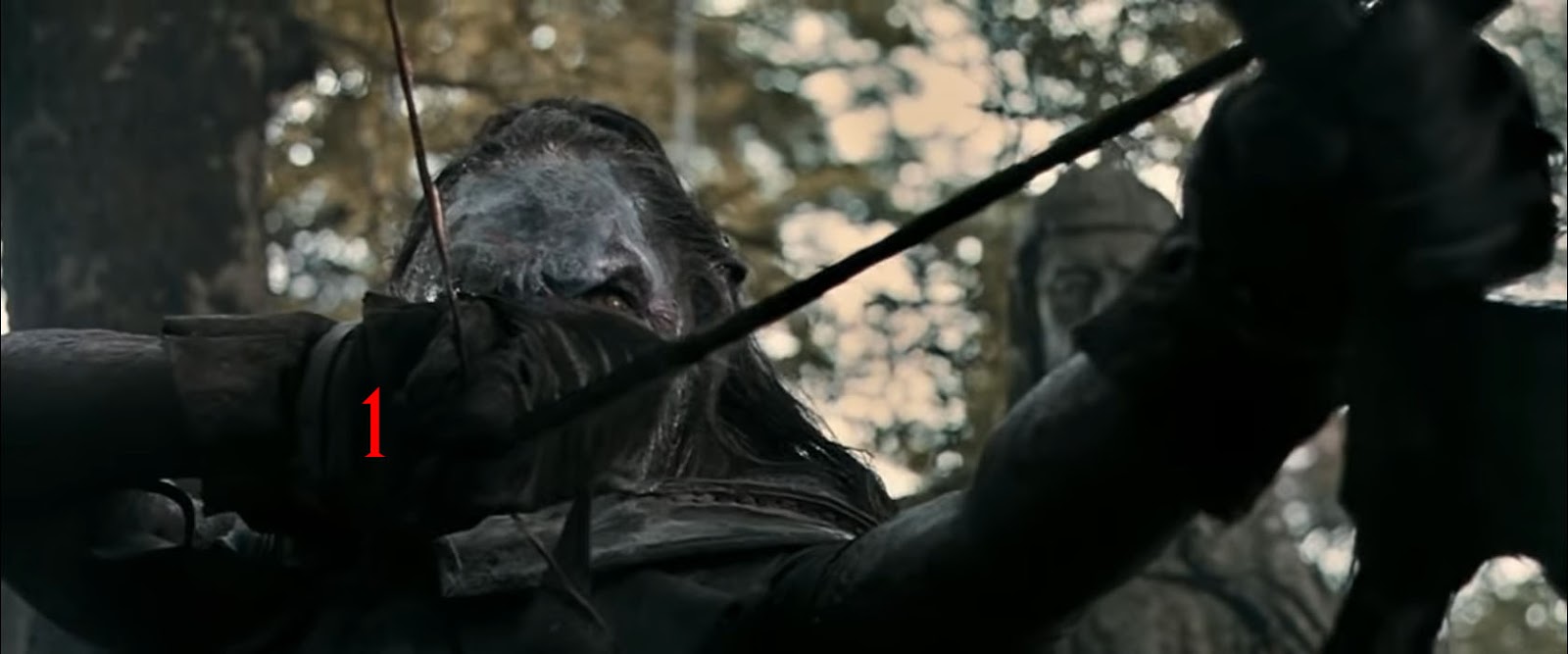
1.
Reverse grip. There is very little evidence that this style was ever
used historically anywhere in the World. There are no added benefits of
reversing the Mediterranean grip like this.
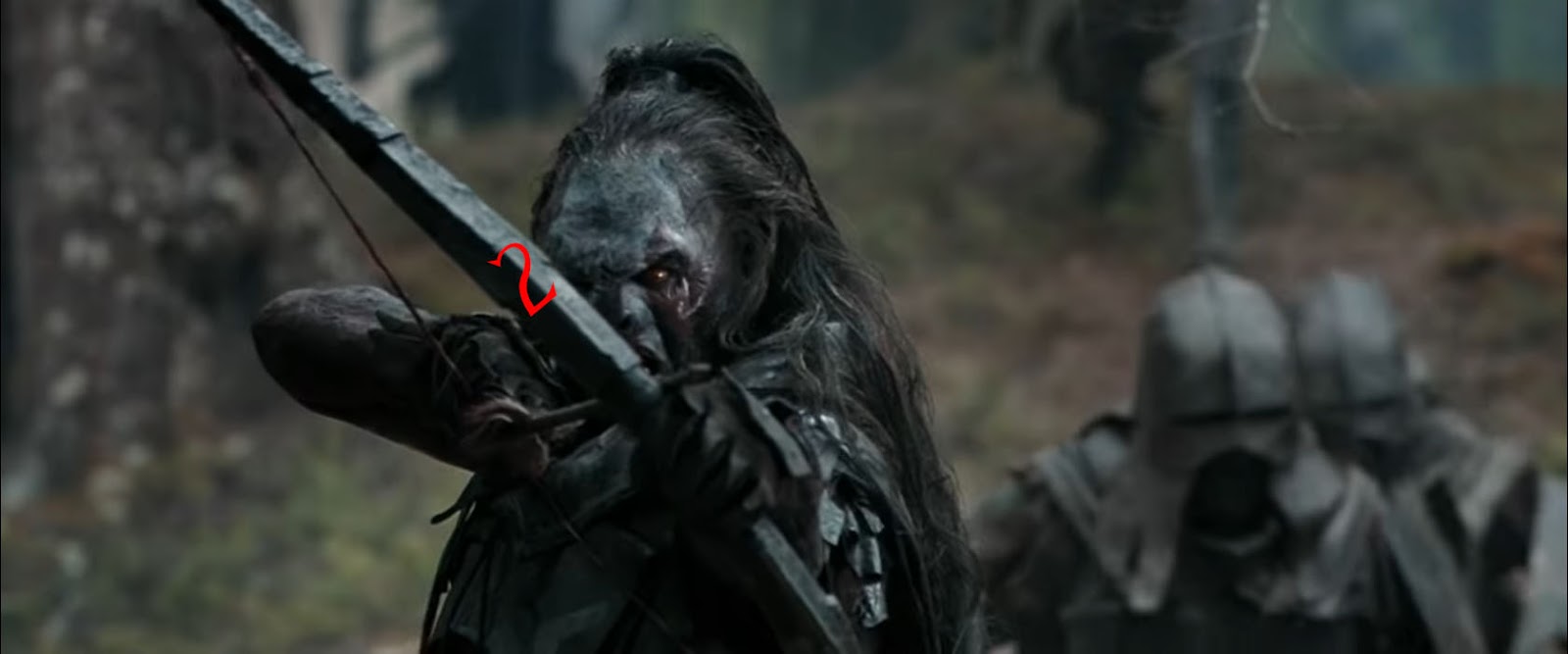
2.
The reverse grip has lead Lurtz to cant his bow, but this is in limits
of reason, so it's not a mistake. What is though, is that the back of
the bow has a clear edge on it. Bow backs should be (near) flat since
that makes them structurally stronger. A wooden selfbow is made from a
split tree trunk so that the back of the bow is made from the outer
layer of wood, and belly from the inside. The bow is planed so that the
back is formed of a single grain, and not sawn cross-grain, since that
would make it weaker. Making a bow with a triangular shape like this
would make the single grain back of the bow very thin.
Longbow
cross sections. The back of the bow (pointing outwards of the archer)
is on top of these pictures. As you can see, the back is always pretty
flat.
Composite recurve bows are also pretty flat on
their backs since it's easier to glue flat pieces together and there
would be no added benefit of this kind of edge on the bow. Some
composite bows however turn towards this trriangular back shape near the
end of their limbs, in the
siyahs. That makes those parts less
bendy, which is a desired effect there, but not in the lower limbs on
the bow. Lurtz's bow is triangular everywhere on its back. I guess
orcish things have to be black and edgy, like their souls (if they have
those).
Cross
sections of a limb of a composite recurve bow. The limb is more or less
flat (to make it more bendy) until the siyah (left in the picture)
which is triangular to make it bend less. It wouldn't be a really good
idea to make the whole bow triangular on its back.
3.
Our poor fallen hero Boromir is redeeming himself here, making the
ultimate sacrifice to save the lives of the hobbits Merry and Pippin
from the orcs. He continued fighting after Lurtz shot two arrows
straight to his upper body. The third one dropped him to his knees. Is
this believable?
The first arrow struck to the upper left
pectoralis major
muscle (big chest muscle), behind which at this spot is the left lung. A
human will die of arrow punctured lung if not given medical treatment,
but the death doesn't come immediately, it can take minutes up to half
an hour maybe. The second arrow struck Boromir to his lower left
abdomen, where there are intestines. Punctured guts will also lead to
death without treatment, but not in an instant. Boromir continues
fighting exhausted even after these two shots.
Panting
breath results from the punctured lung, and he only uses the right hand
for swordfighting, except for one powerful blow where he uses both
hands. The first arrow to the left chest muscle have probably made
moving the left arm difficult and painful. The third arrow drops Boromir
on his knees again for the last time. This shot hits straight in the
middle of his torso, where the stomach and liver are. This is also a
deadly shot, but it will take awhile for him to die. All and all I think
the death of Boromir is depicted fairly realistically, the weariness
and woundings are really taking a toll on him and finally he collapses.
Beautifully filmed and painfully sad at the same time.
Something
I want to say about the armour though. Boromir is wearing a mail shirt
(a 'chain' before a 'mail' is
completely redundant) under his sleeveless leather coat and
short-sleeved fabric tunic. Those
garments over the top of the mail shirt are not armour, just clothes,
since they wouldn't provide much protection from weapons. But the
mail shirt (of which we can only see sleeves from under the tunic) is
real armour, and capable of protecting its wearer from arrows pretty
effectively. A widely spread misconception regarding mail is that it's
good against slashing attacks, but weak against puncturing hits, such as
thrusts and arrow hits. This is not entirely true. While mail protected
obviously better against cutting attacks (like all armours were), an
expensive good quality mail (which all historical mail was, unlike most
modern mail used in reenactment) did stand a chance against arrows too.
Only specifically designed "mail piercer" arrowtips of long bodkin type
(needle bodkins) shot from powerful bows could penetrate it.

Arrows Lurtz are using do not seem to be (long) bodkins, as shown on the right.
Lurtz's
arrowtips are not shown in focus to the camera at all, but they seem to
be like "standard" arrowheads of leaf shape, generally quite small,
which is good. But they do not seem to be bodkins, at least long ones.
Would those penetrate mail armour? Probably not. And Lurtz's arrows
struck something like halfway through Boromir, his armour and clothes
and all. Lurtz is supposed to be an exceptionally strong warrior, even
for an Uruk-hai, so maybe his bow is super strong?
But
then again we see in close-up shots that Boromir's chest skin is showing
between the lapels of his tunic, and that indicates that there is no
mail underneath the torso (another possibility is that his mail shirt
also has a wide neck hole). And in fact in the costume of actor Sean
Bean there are only mail sleeves attached in his undertunic (done for
saving production time of course).
Boromir's
costume only included mail sleeves sewn onto an undershirt, instead of a
full mail armour. On the right an example of European 16th century
arming doublet
with sewn on mail sleeves. This would have been worn under full plate
armour, and the breast and backplates would have covered the parts were
there are no mail in this arming doublet.
While this
was done historically in the 15th century and later when plate armour
was used by knights and men-at-arms, the pieces of mail that were sewn
to an arming doublet were used at those points were there were no
plates, such as armpits and inside of elbows. Those who didn't have
plate armour, had mail shirts covering their torso and arms. Since
Boromir doesn't have any plate armour with him on the travel with the
Fellowship, it is reasonable to suggest that he should have an entire
mail shirt under his outer garments, and not just sewn on sleeves. Since
nobody would use mail (or any armour) to protect the arms before the
torso.

Lurtz
is shown here executing the last deadly shot, which he ultimately fails
due to Aragorn's interruption. This is the first time we see his bow
fully. And it is indeed an interesting piece of weaponry. The general
shape of the bow is strange, like an inverted recurve bow, without the
siyahs though. But this shape of bows are known from a few places and
times in World history, ancient Egypt and the Near East coming to mind
first. It's a perfectly functional design for a bow, yet a peculiar one.
Suits the orcs well I think, since it's so different than the bows of
the elves or men of Middle Earth. However, some things I consider
mistakes here.
On
left, a recurve bow of Turkish early modern period form, on right an
angular bow of ancient Egyptian form of the Bronze Age. The orcish bow
resembles a mix of these two.
4.
This Uruk-hai bow has two blades attached to over and under its handle.
This is stupid, since nobody would use a bow as a hitting weapon. Not
even the orcs. There are some pretty stupid things said about the
Uruk-hai and orcs in general in the supplementary material to the
trilogy of films by Peter Jackson. I remember reading as a child from
the book "
Lord of the Rings: Weapons and Warfare" that the boots
Uruk-hai are using were nailed to their feet! why on Middle Earth would
anybody do that? It would make their walking painful, probably causing
severe effects due to bleeding etc. Even though the Uruk-hai apparently
don't feel pain it would still be very counterintuitive and idiotic
thing to do. Why not just walk without boots then, since the purpose of
boots is to protect the feet?
The same kind of thinking applies to other
design about the orcs, everything have to be crudely made, look very
worn out (even though it's shining new), everything is very angular and
spikey, and looks painful to wear. This is true for the bow too, which
have the weird angle at its back which I talked about earlier. It also
has these blades that are never even used in the movie. Since they're
useless. It's like a knuckle duster in a sword fight, that means an
obvious loss. Lurtz picks up a sword after Aragorn falls him down since
even the moviemakers realised it would look stupid if he fought with
using the bladed bow as a knuckle duster, and it would be too easy for
Aragorn to win against that.
5. This bow makes a very
creeky sound when drawn. This would be a design mistake applied to
orcish bows specifically if it wouldn't be a mistake applied to all bows in
historical films! Bows do not make a creeking sound when drawn. If they
do, they are probably somehow broken and in danger of snapping or
splitting at some point in near future. And don't tell me this is an old
bow, since it's brand new, like everything the Uruks have, as well as
themselves.
What else is good about this picture is
that Lurtz has a hip quiver! Not the ubiquitous back quiver that Legolas
has. And everybody else in movies. But nobody in real World Middle
Ages, the obvious inspiration behind Middle Earth.